
Criminal Cases in the Robertson County Courts
Robertson County criminal court cases do not all land in one office. The 82nd Judicial District Court hears felonies and other district criminal matters. Its filed records belong to the Robertson County District Clerk, whose counter is in the Second Floor Annex at 103 E. Morgan Street in Franklin. Class A and Class B misdemeanor files belong to the County Clerk at the historic courthouse, 102 W. Decherd Street. The distinction affects where a name or cause-number search succeeds.
The official District Clerk page is the county source for felony file contacts, docket links, and copy information.
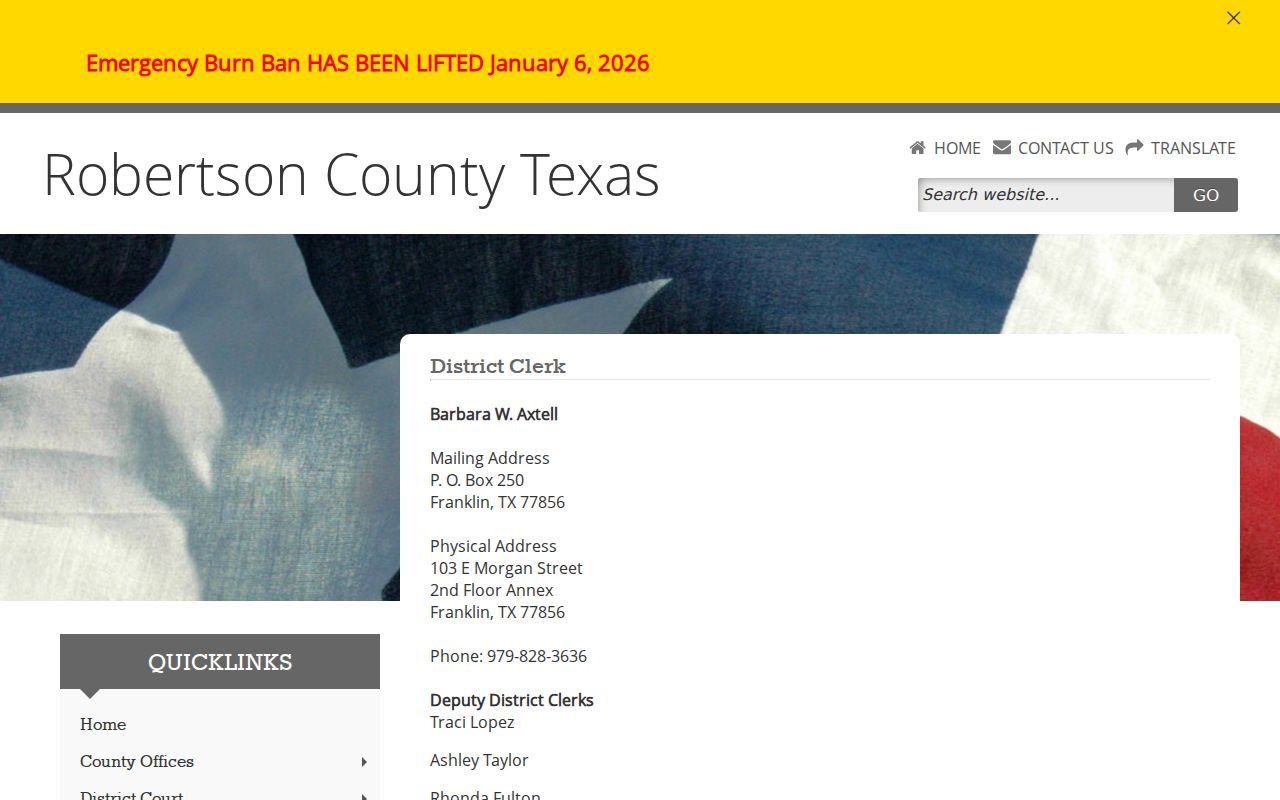
This office view reinforces the key routing rule: Robertson County felony records belong with the District Clerk, not the judge's administrative office.
Fine-only cases take another route. Hearne, Franklin, and Calvert municipal courts keep city ordinance and most Class C case records. Four Robertson County justice courts also handle fine-only matters and magistrate work. A missed city citation may therefore create a court record or capias outside both the county misdemeanor index and the felony docket. Start with the offense level and issuing court instead of assuming every local criminal charge appears at the district courthouse.
Robertson County Criminal Dockets Are Calendars
The 82nd District Court page publishes dated Robertson County docket PDFs from 2023 forward, including current settings. These files are useful leads. They may show a cause number, defendant display, counsel, a hearing date, the setting type, and charge or status shorthand. Yet a setting only shows that a matter was placed on a court calendar. It does not prove the hearing occurred, the charge remained the same, or the judge entered a final disposition.
The same Robertson County District Court source presents those dated settings through the county portal.
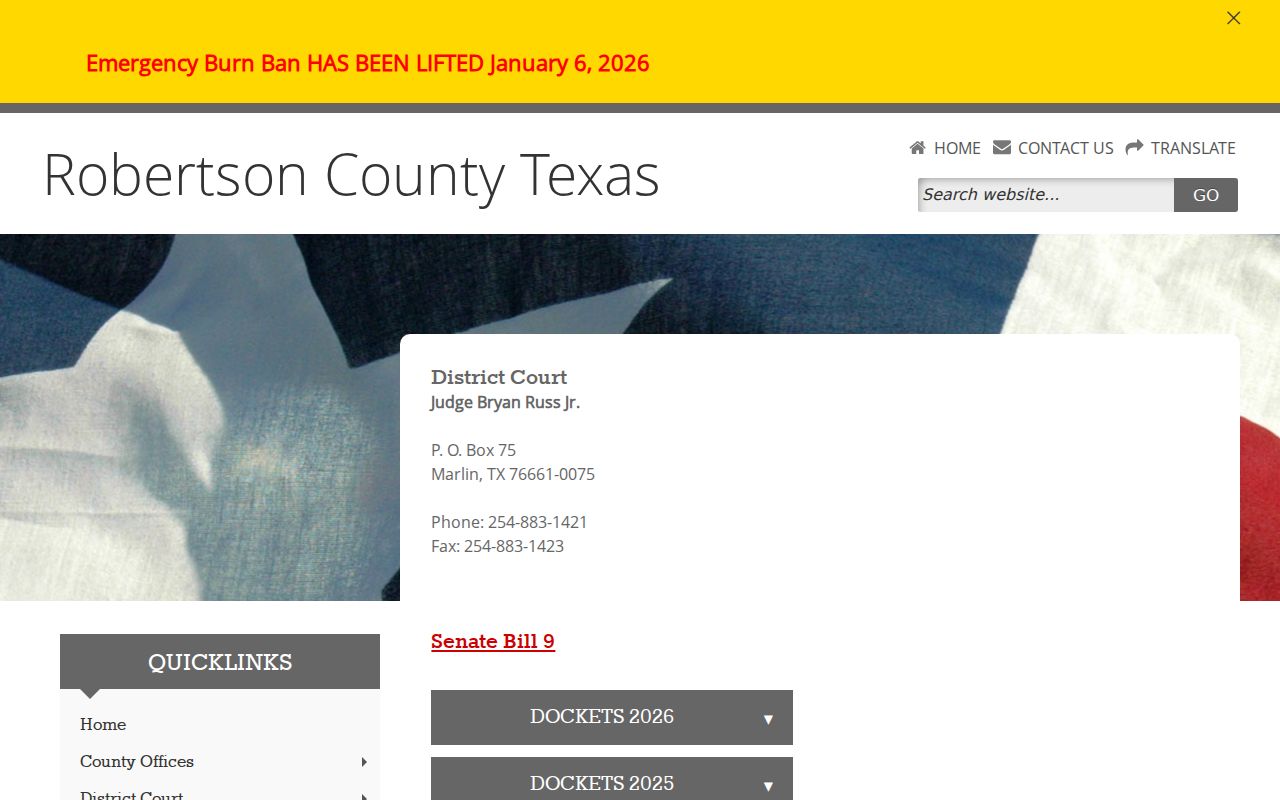
The screenshot represents a calendar channel, so the clerk file is still needed to confirm what happened after a listed setting.
Use the cause number from a docket to ask the District Clerk for the actual Robertson County criminal case file. If the name is absent, try another setting date or contact the clerk. Older and closed files may never appear in the dated PDF collection. A docket search is a path to the record, not the record itself.
Note: A Robertson County docket setting is not a conviction, dismissal, or sentence; the signed judgment and clerk entries establish the result.
How to Search Case Records
A sound Robertson County case search uses every channel that fits the court level. Gather the full name, likely filing year, court, and cause number when known. The District Clerk handles felony search and copy requests by telephone or at its Franklin counter. The County Clerk page exposes a “SEARCHES: Criminal, Probate & Civil” route for misdemeanor research, though the clerk should confirm year coverage and image access. re:SearchTX adds a statewide electronic layer, but participation, document access, and cost depend on the clerk and user role.
- Identify whether the filed charge is a felony, county misdemeanor, or fine-only city or justice matter.
- Check the matching Robertson County clerk page or dated docket and capture the cause number.
- Use re:SearchTX by party name or case number as a second electronic route.
- Read the docket entries, but confirm the charging instrument, judgment, and sentence in the clerk file.
- Request a plain or certified copy from the custodian when the online view is incomplete.
| Search key | Channel | Required | Use |
|---|---|---|---|
| Party name | County clerk or re:SearchTX | Varies | Broad first search; confirm identity with other facts |
| Cause number | Clerk, docket, re:SearchTX | No | Best key for one prosecution |
| Filing or setting year | Dated district docket | No | Narrows calendar PDFs |
| Court level | Local clerk | Practical | Routes felony, misdemeanor, or fine-only files |
| Document type | Copy request | Practical | Specifies indictment, judgment, sentence, or order |
When an electronic result supplies only a case index, use the same cause number in a clerk request. Ask whether the document is available online, as an electronic copy, or only from the Robertson County counter.
The official re:SearchTX interface shows the statewide electronic court-record access layer used in this search path.
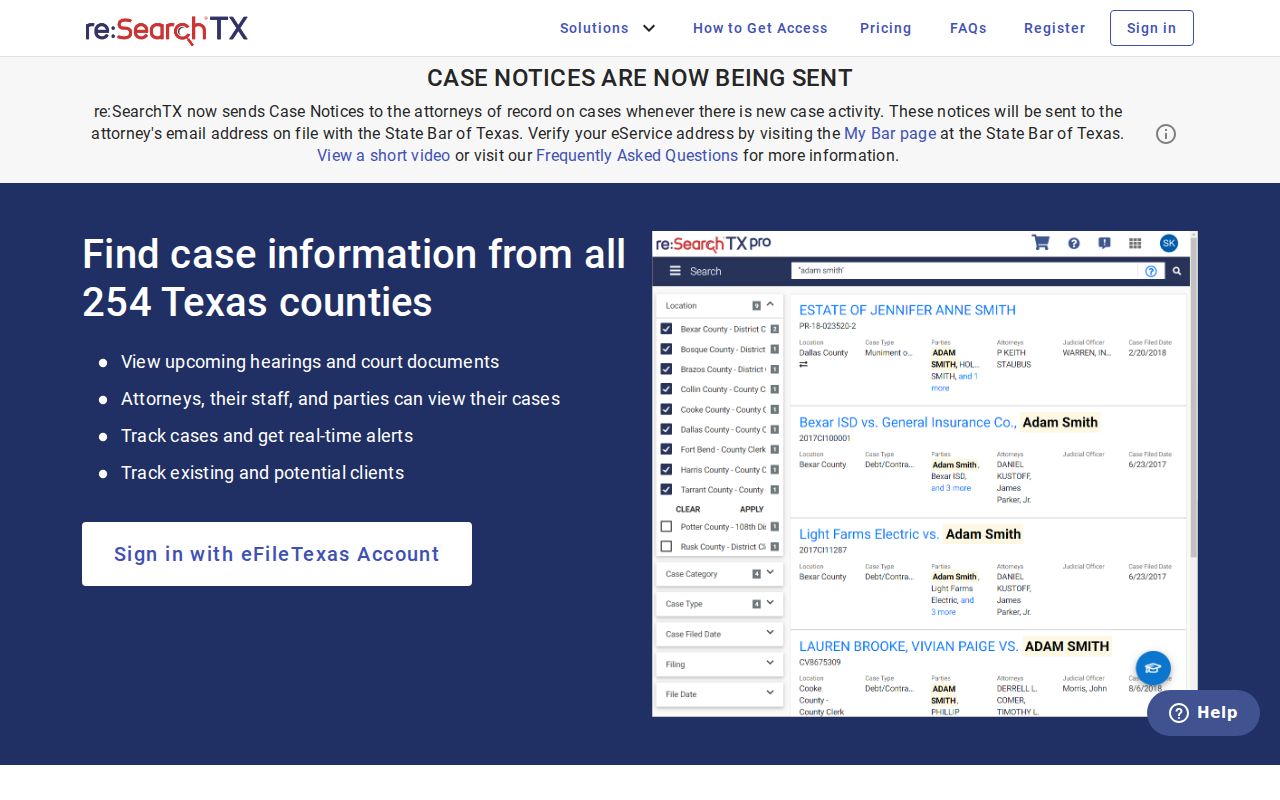
The interface does not guarantee complete Robertson County coverage because documents and access depend on the participating clerk, record type, role, and fee rules.
Robertson County Criminal Courts Compared
The same name can appear in separate Robertson County court systems. A district cause number points to the felony clerk file. A county-court cause belongs to the County Clerk. A city citation stays with the relevant municipal clerk unless later events create a separate county case. Justice courts also keep their own fine-only and magistrate records. That local division is why a single no-result search cannot establish that no case exists.
| Court level | Typical criminal work | Robertson County custodian |
|---|---|---|
| 82nd District Court | Felony and district criminal cases | District Clerk, 979-828-3636 |
| Robertson County Court | Class A and B misdemeanors | County Clerk, 979-828-4130 |
| Municipal courts | City ordinance and most Class C matters | Hearne, Franklin, or Calvert clerk |
| Justice courts | Fine-only cases and magistrate functions | Correct precinct clerk |
The court named on the citation, bond paper, or charging document is the strongest routing clue. When it is unclear, the Robertson County clerk can confirm whether a cause number belongs to that office without deciding the case’s legal effect.
The Robertson County Clerk's official page is the county route for its criminal, probate, and civil searches.
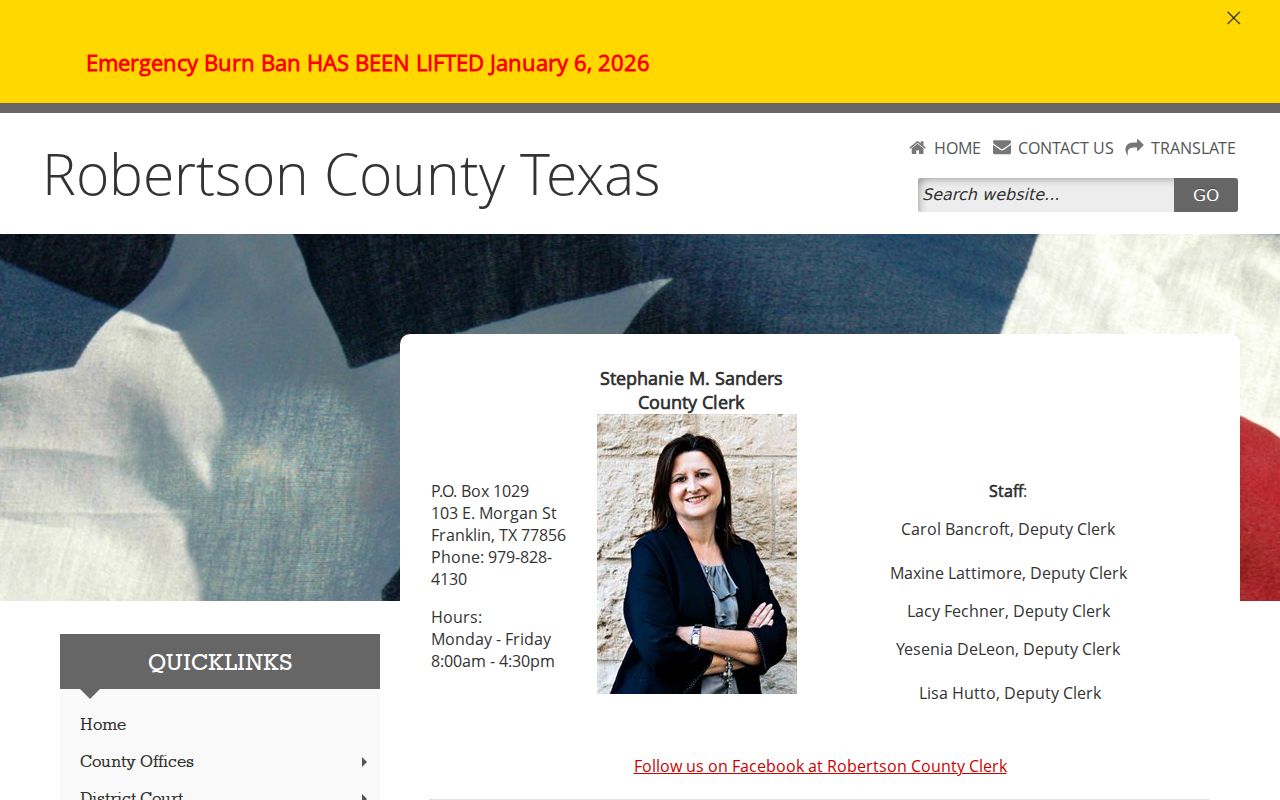
That search belongs to the misdemeanor side of the local court map and should not be read as a substitute for the District Clerk's felony files.
What the Case File Shows
Robertson County criminal case files are organized by cause number and prosecution. The file can show how the accusation changed after booking, which motions were filed, what the court ordered, and how the charge ended. Ask for more than a name-search result. The charging paper, chronological docket, signed judgment, and sentencing order answer different questions and may need separate copy requests.
| Cause Number & Court | Identifies the prosecution and the clerk responsible for the file. |
|---|---|
| Charging Document | Shows the filed complaint, information, or indictment rather than the intake allegation. |
| Docket Entries | Lists filings, settings, orders, and other events in date order. |
| Hearing Dates | Shows scheduled proceedings; a setting alone does not establish an outcome. |
| Disposition & Judgment | Records dismissal, acquittal, conviction, or another final result. |
| Sentence & Conditions | States punishment, community supervision, costs, or other ordered terms. |
Financial ledgers, notices, bond papers, and capias documents may also appear. Personal identifiers and protected victim details can be redacted even when the rest of the Robertson County case file is open.
Robertson County Court Copy Costs
The District Clerk’s published schedule reviewed for Robertson County lists a $5 search fee to locate a cause number or confirm a record. Certification costs $5 plus $1 per paper page. A noncertified paper copy is listed at $1 per page. Electronic copies carry a $1 minimum for up to ten pages and $0.10 for each added page. The indexed schedule was effective in 2022, and newer fee links exist, so confirm the current total before ordering.
State the exact documents needed and whether certification is required. A certified judgment can be useful when an official copy must show the clerk’s seal, while a plain docket copy may be enough for personal review. Large or old files may take more staff search time than a current electronic case. Robertson County searchers should ask about delivery method and cost before authorizing a broad request.
Stages of a Criminal Case
A Robertson County court file begins only when papers reach the court. An arrest or summons may come first, followed by magistration and warnings. Texas calls for magistration without unnecessary delay and generally within 48 hours of arrest. The prosecutor then screens the matter. A misdemeanor may proceed by information, while a felony may move through a grand-jury indictment. Arraignment, discovery, motions, plea talks, or trial follow before judgment and sentencing.
Case flow: Charges Filed › Arraignment › Pretrial › Plea or Trial › Disposition › Sentencing
This flow explains why a jail booking charge and a later Robertson County criminal case can differ. The prosecutor may reject, reduce, add, or revise charges. For that reason, connect the booking record to the clerk file by name, date, and cause number, then rely on the filed instrument and judgment for the court outcome.
Robertson County Dispositions in Plain Terms
Disposition means the outcome of a charge. A dismissal ends that prosecution without a conviction on the dismissed charge, but it does not by itself erase an arrest entry. An acquittal is a not-guilty result after trial or a directed judgment. Deferred adjudication postpones a conventional judgment of guilt while court-ordered community supervision is completed, yet it may remain significant criminal-history information.
- Nolle prosequi
- The prosecutor formally declines to continue a charge.
- True bill
- A grand jury returns a felony indictment.
- No-bill
- A grand jury declines to indict the proposed felony charge.
- Judgment
- The signed court document that states the adjudication and result.
Read each Robertson County charge on its own. One cause can include more than one count, and those counts may end differently. The full clerk file, not a docket abbreviation, shows which charge the judgment addresses.
When Robertson County Case Search Fails
A no-result on re:SearchTX or a county index is not proof that Robertson County has no criminal case. Coverage varies by clerk, access role, year, and document type. Search spelling variants, check the dated district dockets, and confirm whether the case belongs to the County Clerk instead. If the event began with a city citation, call that municipal court. Fine-only records do not move into the district index merely because a warrant later issues.
For an older file, give the proper clerk a full name, approximate year, offense level, and any booking or warrant number. Ask whether an archived index must be checked. If the clerk locates the cause, request the charging instrument, docket, judgment, and sentence by name. A contextual link between an arrest and filed charge can also be checked through Robertson County arrest history, but the court file controls the prosecution result.
Access & Restrictions
Texas court records follow judiciary access rules and clerk procedure, not the ordinary executive-agency route under the Texas Public Information Act. Open files may still contain redactions. Social Security numbers, financial account data, protected victim or child identifiers, confidential juvenile material, and sealed documents are not made public merely because other docket entries can be viewed.
Online access can be narrower than the courthouse file. Ask the Robertson County clerk whether a document exists when an image is missing, and state the precise paper needed. An expunction order can require qualifying records to be removed or destroyed, while an order of nondisclosure limits public release but preserves access for listed government entities. Neither remedy should be inferred from a blank search screen. Verify the order and case status with the clerk that holds the original file.